Does Living Near the LA Subway Boost Home Prices? What the Data Actually Shows

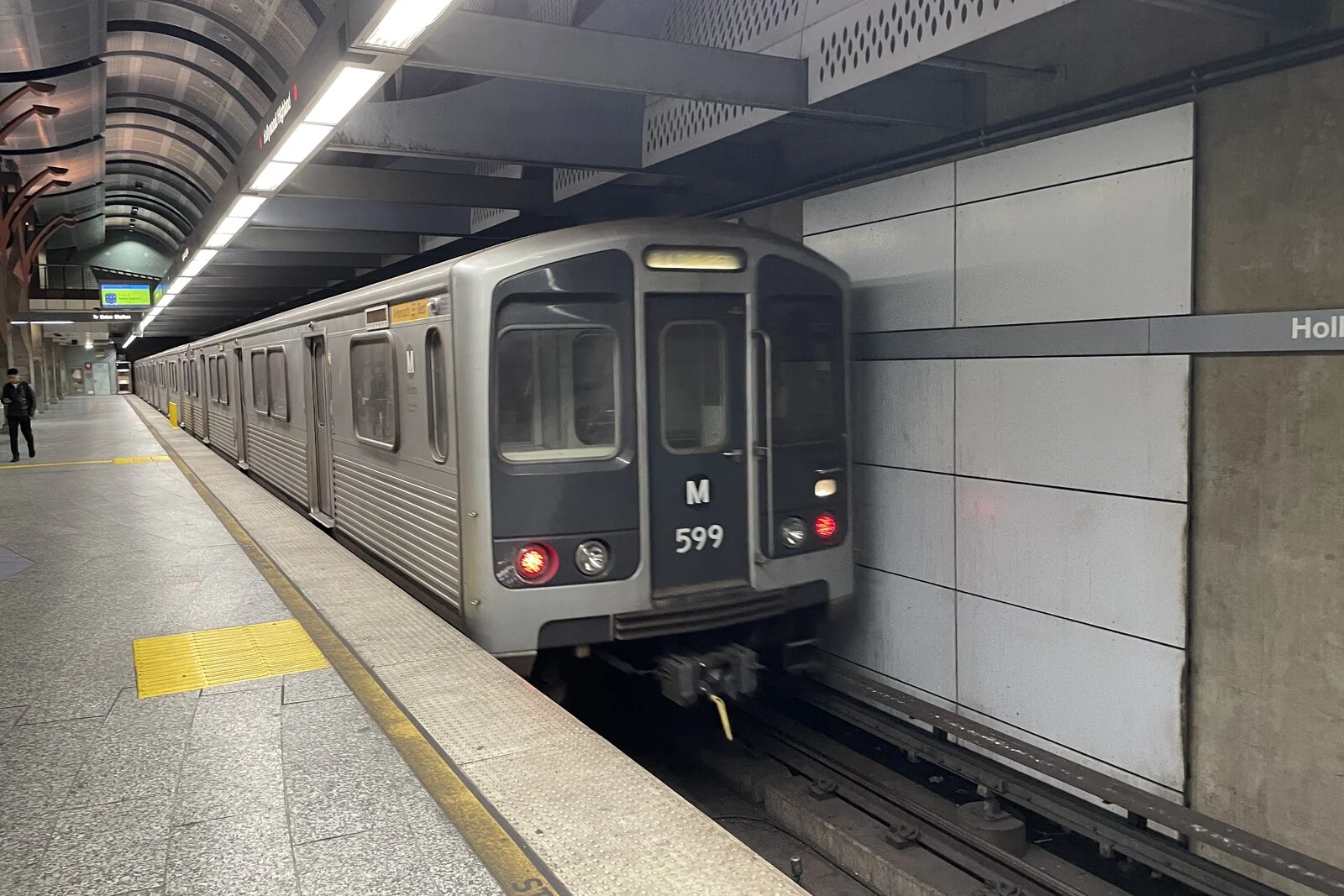
Conventional real estate wisdom says that buying near rail transit is a reliable bet for faster appreciation. In dense cities built around subways, being a five-minute walk from a station often commands a growing premium. So it’s fair to ask whether the same rule holds true in Los Angeles—and whether buyers should pay extra today to live near existing or planned Metro stops.
To find out, we looked at TurboHome closed-sale data across Los Angeles County from 2012 through November 2026. The headline finding might surprise you: living next to an LA subway station has not produced faster home price growth. In fact, homes within half a mile of Metro B and D Line stations appreciated more slowly than homes slightly farther away—and more slowly than LA County overall.
The Big Picture: Subway-Adjacent Homes Have Lagged Behind
For this analysis, we tracked median sale prices per square foot around the 16 existing Metro B and D Line subway stations stretching from Union Station to North Hollywood. We compared three groups:
- Near station: Homes sold within 0.5 mile of a subway station
- Surrounding ring: Homes sold between 0.5 and 1.5 miles from the nearest station
- LA County: All closed sales countywide
From 2012 through 2026 (year-to-date through November), median prices per square foot within half a mile of a station rose 96%. Over the exact same stretch, homes in the surrounding 0.5-to-1.5-mile ring climbed 123%.
| Year | Near station (≤0.5 mi) | Surrounding ring (0.5–1.5 mi) |
|---|---|---|
| 2012 | $306 | $334 |
| 2016 | $522 | $532 |
| 2019 | $600 | $614 |
| 2022 | $647 (peak) | $737 |
| 2025 | $624 | $761 |
| 2026 (partial) | $601 | $745 |
Look closely at the timeline, and you can see when the two markets split. Through 2019, station-adjacent homes and their surrounding rings moved almost in lockstep. The gap opened around 2019–2020 and widened sharply after the pandemic, when many buyers started prioritizing extra living space over transit proximity.
Since then, the divergence has stuck. Near-station prices peaked at $647 per square foot in 2022 and have slid about 7% since, landing at $601 in partial 2026 data. Meanwhile, the surrounding ring hit $761 in 2025 and sits at $745 so far in 2026—still close to its high. Over the full period, the price premium that subway-adjacent homes once held over the broader county shrank noticeably.
Why the Gap Opened: It’s Mostly a Condo Story
At first glance, those numbers make it look like LA buyers simply turned away from the subway. Dig one layer deeper, though, and a major driver jumps out: housing mix.
The neighborhoods surrounding B and D Line stations—including Downtown, Koreatown, Hollywood, and North Hollywood—are dense condo markets. Roughly 73% to 78% of all home sales within half a mile of a station are condos. Step just slightly outside that radius into the 0.5-to-1.5-mile ring, and condos make up only about 31% of sales.
Because condos across LA County grew more slowly than single-family homes in the post-2020 market, that heavy condo concentration pulls down overall station-area numbers. Comparing apples to apples by home type makes the pattern much clearer. Here is how median prices per square foot changed between 2012–14 and 2023–25:
| Home type | Near station (≤0.5 mi) | Ring (0.5–1.5 mi) | LA County |
|---|---|---|---|
| Condos | $396 → $620 (+57%) | $365 → $621 (+70%) | $286 → $580 (+103%) |
| Single-family | $389 → $745 (+91%) | $459 → $881 (+92%) | $284 → $618 (+118%) |
| Townhouses | $324 → $573 (+77%) | $319 → $606 (+90%) | $272 → $512 (+88%) |
Two details stand out in this breakdown:
- Single-family homes near stations kept pace with their neighbors. Detached houses within half a mile of the subway rose 91%, virtually matching the 92% gain in the surrounding ring. Still, both lagged LA County’s 118% single-family gain, and the near-station single-family premium over the county narrowed from 37% in 2012–14 to 21% in 2023–25.
- Station-area condos lost almost all of their countywide premium. In 2012–14, condos near Metro stations sold for 38% more per square foot than the county condo median. By 2023–25, that gap had shrunk to just 7%—and station-area condos ($620/sq ft) were essentially tied with condos in the surrounding ring ($621/sq ft). Townhouses showed a similar, though smaller, lag near stations (+77% vs. +90% in the ring and +88% countywide).
In short, the underperformance right around LA subway stations is largely a condo story rather than a simple rejection of transit.
What About the Planned D Line Extension Along Wilshire?
Many buyers also wonder whether it pays to buy ahead of new transit stops, expecting prices to jump once trains arrive. To check for early signs of a "future station" bump, we ran the same comparison around three planned D Line extension stations along Wilshire Boulevard: La Brea, Fairfax, and La Cienega.
Between 2012 and partial 2026:
- Within 0.5 mile of the future stations: Median price per square foot climbed from $450 to $830 (+84%).
- In the 0.5-to-1.5-mile surrounding ring: Median price per square foot rose from $427 to $877 (+105%).
So far, there is no sign in the sales data that buyers have been paying an extra premium in anticipation of those new stations. Just like along the existing B and D Lines, properties slightly farther away outpaced homes closest to the corridor.
Important Caveats Behind the Data
Before making any buying or selling decision based on these numbers, keep a few limitations in mind:
- These are medians, not a controlled study. Homes near subway stations differ from homes farther out in age, size, layout, and condition. Median price per square foot captures broad market shifts, not identical properties.
- Transit is just one variable. Over this period, station-area markets were also shaped by the pandemic-era shift toward remote work and larger homes, rising condo HOA costs and insurance expenses, and downtown office vacancy.
- Data boundaries matter. Station locations are based on approximate public coordinates, and 2026 figures reflect year-to-date closed sales through November rather than a full calendar year.
What This Means for LA Buyers and Sellers
The takeaway from more than a decade of sales data is straightforward: in Los Angeles, don’t assume "close to the Metro" automatically translates into faster home appreciation.
If you’re buying: That isn’t necessarily bad news. Because station-area condos have seen their price premium over the rest of LA County shrink from 38% to 7%, they may offer solid relative value today—especially if you actually want the lifestyle benefits of living near rail, like easier car-free commuting. Just go in buying for the home and neighborhood you want, not on the assumption that transit proximity will outpace the broader market.
If you’re selling near a station: Price your home against recent, comparable sales right in your immediate building or neighborhood—not on an expected "Metro premium." Today’s buyers are looking closely at total monthly costs, square footage, and local comps, and the data shows they aren't paying extra for subway proximity alone.
Whether you’re eyeing a condo near Koreatown or preparing to list a home near the Wilshire corridor, grounding your strategy in real neighborhood data beats relying on real estate myths. Ready to see what homes are actually selling for on your block? Connect with TurboHome to get a clear, data-backed look at LA comps and make your next move with confidence.

Ready to buy and keep the commission?
Talk to a local agent in California or Texas about your search and your TurboHome rebate.
Licensed local Realtors. Free private tours. No obligation.